Smart Home Upgrades That Increase Comfort, Security, and Property Value
Technology has transformed the way we live, and today’s homes are becoming smarter than ever before. From controlling lights with your voice to monitoring your property from anywhere in the world, smart home technology offers convenience, energy savings, and enhanced security. More importantly, many smart home upgrades can increase the value of your property while making everyday life easier.
Whether you’re planning a major renovation or simply looking for affordable improvements, investing in smart home features can provide long-term benefits. Buyers are increasingly interested in homes equipped with modern technology, and many smart devices are easy to install without extensive remodeling.
This guide explores the best smart home upgrades that improve comfort, strengthen home security, reduce energy consumption, and boost your home’s market appeal.
Why Smart Home Upgrades Are Worth the Investment
A smart home uses connected devices that can be controlled through smartphones, voice assistants, or automated schedules. These systems help homeowners manage lighting, heating, security, appliances, and other functions more efficiently.
Some of the biggest advantages include:
- Improved convenience
- Better home security
- Lower energy bills
- Increased property value
- Greater control over household systems
- Enhanced safety
- Personalized living experiences
As technology continues to evolve, smart home features are becoming standard expectations for many homebuyers.
Smart Lighting Systems
Lighting is one of the easiest and most affordable smart home upgrades.
Smart lighting allows you to control brightness, colors, and schedules through a mobile app or voice commands. You can automate lights to turn on when you arrive home, dim them for movie nights, or switch them off remotely if you forget.
Benefits
- Lower electricity consumption
- Improved home security through scheduled lighting
- Convenient remote control
- Custom lighting scenes
- Longer-lasting LED bulbs
Smart lighting also adds a modern touch to any room without requiring major renovations.
Smart Thermostats
Heating and cooling account for a large portion of household energy costs. A smart thermostat learns your routine and automatically adjusts temperatures to improve comfort while reducing unnecessary energy use.
Instead of heating or cooling an empty house, the system can automatically switch to energy-saving modes when you’re away.
Advantages
- Reduced utility bills
- Improved indoor comfort
- Remote temperature control
- Automated scheduling
- Energy usage reports
This upgrade often pays for itself through long-term energy savings.
Smart Door Locks
Traditional keys can be lost, copied, or forgotten. Smart locks provide secure, keyless access using smartphone apps, PIN codes, or fingerprint recognition.
Many systems allow temporary access codes for guests, family members, or service providers.
Benefits
- Keyless entry
- Remote locking and unlocking
- Activity logs
- Temporary guest access
- Enhanced security
Homeowners no longer need to worry about whether they locked the front door before leaving.
Video Doorbells
Video doorbells have become one of the most popular smart home security upgrades.
They allow homeowners to see, hear, and communicate with visitors through a smartphone, even when away from home.
Features
- Motion detection
- Live video streaming
- Two-way communication
- Package monitoring
- Video recording
These devices help deter theft while providing greater peace of mind.
Smart Security Cameras
Modern security cameras offer far more than simple video recording.
Many include:
- Night vision
- Motion alerts
- Cloud storage
- Facial recognition
- Remote monitoring
- High-definition video
Indoor and outdoor cameras help homeowners monitor their property around the clock.
Smart Alarm Systems
Traditional alarm systems have evolved into fully connected security networks.
Smart alarms can monitor:
- Doors
- Windows
- Motion
- Glass breakage
- Smoke
- Carbon monoxide
- Water leaks
If unusual activity is detected, homeowners receive instant notifications on their smartphones.
Smart Garage Door Openers
Forgetting to close the garage door is a common concern.
Smart garage systems allow you to:
- Open or close the garage remotely
- Check door status
- Receive notifications
- Schedule automatic closing
This upgrade improves both convenience and home security.
Smart Smoke and Carbon Monoxide Detectors
Standard detectors sound an alarm only inside the home.
Smart detectors send notifications directly to your smartphone when smoke or carbon monoxide is detected, even if you’re away.
Many also perform automatic self-testing and provide battery status updates.
Smart Water Leak Sensors
Small plumbing leaks often go unnoticed until serious damage occurs.
Water leak sensors detect moisture near:
- Water heaters
- Washing machines
- Dishwashers
- Under sinks
- Basements
Early detection can prevent expensive water damage and mold growth.
Smart Irrigation Systems
Outdoor water use can become expensive during warmer months.
Smart irrigation systems monitor weather conditions and soil moisture to water lawns only when necessary.
Benefits
- Reduced water consumption
- Healthier landscaping
- Lower utility bills
- Automated scheduling
These systems help maintain attractive outdoor spaces with minimal effort.
Smart Window Blinds and Shades
Automated blinds improve both comfort and energy efficiency.
They can open or close automatically based on:
- Time of day
- Sunlight levels
- Temperature
- Voice commands
This helps regulate indoor temperatures while adding privacy and convenience.
Smart Ceiling Fans
Connected ceiling fans automatically adjust speed based on room temperature or occupancy.
Homeowners can also control them remotely using smartphone apps or voice assistants.
Smart fans improve comfort while reducing air conditioning usage.
Smart Appliances
Many household appliances now include Wi-Fi connectivity and intelligent features.
Examples include:
- Refrigerators
- Ovens
- Dishwashers
- Washing machines
- Dryers
- Coffee makers
Smart appliances offer remote monitoring, maintenance alerts, and energy-saving modes.
Smart Plugs
Smart plugs instantly convert ordinary electrical devices into connected devices.
They allow homeowners to control lamps, fans, coffee makers, and other appliances remotely.
Advantages
- Easy installation
- Affordable cost
- Energy monitoring
- Automated schedules
- Voice control
They are an excellent starting point for homeowners new to smart technology.
Smart Home Entertainment Systems
Entertainment systems have become increasingly integrated with smart home technology.
Features include:
- Voice-controlled televisions
- Wireless speakers
- Multi-room audio
- Streaming integration
- Automated home theater settings
These upgrades create a more enjoyable living environment.
Smart Home Hubs
As the number of smart devices grows, managing them individually becomes difficult.
A smart home hub connects multiple devices into one centralized system.
Homeowners can control lighting, security, climate, and entertainment from a single application or voice assistant.
Smart Energy Monitoring Systems
Energy monitors provide detailed information about electricity usage throughout the home.
These systems help identify appliances consuming excessive energy and allow homeowners to make informed decisions that reduce utility costs.
Smart Outdoor Lighting
Outdoor smart lighting improves both security and curb appeal.
Motion-activated lights automatically illuminate driveways, walkways, patios, and entrances when movement is detected.
Benefits include:
- Increased security
- Better visibility
- Lower energy consumption
- Improved appearance
Smart Home Office Upgrades
With more people working remotely, smart office improvements have become increasingly valuable.
Popular upgrades include:
- Smart lighting
- Automated blinds
- Wireless charging stations
- Smart speakers
- Climate control
- Noise management devices
These features improve productivity while creating a comfortable workspace.
Smart Bathroom Upgrades
Modern bathrooms can also benefit from connected technology.
Examples include:
- Smart mirrors
- Motion-sensor faucets
- Heated smart toilets
- Automatic lighting
- Digital showers
- Voice-controlled music systems
These upgrades combine luxury with convenience.
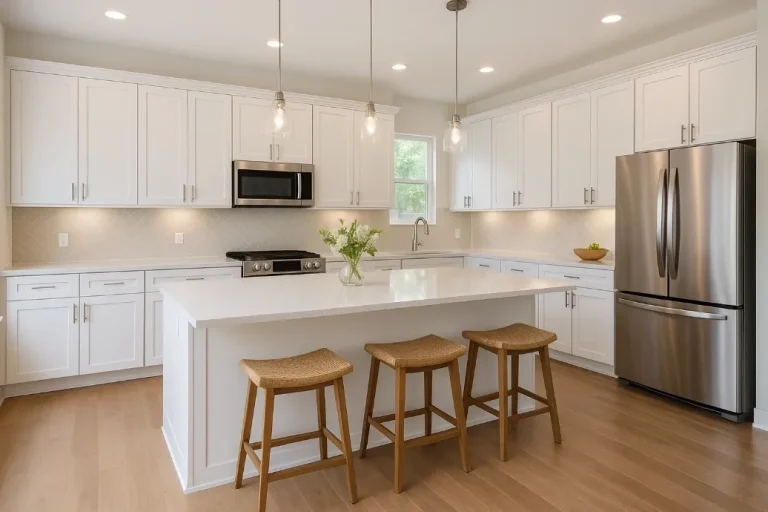
Smart Kitchen Improvements
The kitchen is one of the most popular areas for smart technology.
Consider adding:
- Voice-controlled lighting
- Smart refrigerators
- Connected ovens
- Touchless faucets
- Smart coffee makers
- Automated exhaust fans
These features simplify cooking and improve efficiency.
How Smart Home Upgrades Increase Property Value
Today’s buyers increasingly look for homes equipped with modern technology.
Smart features can make a property stand out by offering:
- Improved security
- Lower operating costs
- Better energy efficiency
- Enhanced convenience
- Modern appearance
- Future-ready infrastructure
While not every device dramatically increases resale value on its own, a thoughtfully integrated smart home can make a property more appealing and competitive in the market.
Choosing the Right Smart Upgrades
Before purchasing smart devices, consider these factors:
Compatibility
Choose products that work together through the same ecosystem or platform whenever possible.
Ease of Installation
Some upgrades require professional installation, while others can be installed in minutes.
Security
Use strong passwords, enable two-factor authentication when available, and keep device software updated to protect your smart home network.
Budget
Start with high-impact upgrades such as smart lighting, thermostats, or video doorbells before expanding into larger systems.
Long-Term Value
Prioritize devices that improve daily living and offer lasting benefits rather than novelty features.
Tips for Building a Smart Home
Creating a smart home doesn’t require upgrading everything at once.
Follow these practical steps:
- Begin with one or two essential devices.
- Choose products from trusted manufacturers.
- Ensure your Wi-Fi network provides reliable coverage throughout the home.
- Keep software and firmware updated.
- Use automation routines to simplify daily tasks.
- Review privacy settings for connected devices.
- Plan future upgrades so devices remain compatible.
Building your smart home gradually allows you to spread costs while learning which features provide the greatest value.
Final Thoughts
Smart home technology has moved beyond being a luxury and has become a practical way to improve everyday living. From intelligent lighting and climate control to advanced security systems and energy-saving devices, these upgrades offer benefits that extend far beyond convenience. They can lower utility costs, enhance safety, simplify household management, and make your home more appealing to future buyers.
The best approach is to invest in smart upgrades that align with your lifestyle and budget. Start with foundational improvements such as smart thermostats, lighting, and security devices, then expand your system over time as your needs evolve. By making thoughtful choices, you can create a home that is more comfortable, secure, efficient, and well-prepared for the future while also protecting and potentially increasing your property’s value.
Frequently Asked Questions
Which smart home upgrade provides the best value?
Smart thermostats, video doorbells, smart lighting, and smart security systems are among the most valuable upgrades because they improve convenience, reduce energy costs, and enhance security.
Do smart home upgrades increase resale value?
Yes. While the exact impact varies by market, homes with energy-efficient and security-focused smart features are often more attractive to buyers and may sell more quickly than similar homes without these upgrades.
Are smart home devices difficult to install?
Many devices, such as smart plugs, light bulbs, and thermostats, are designed for easy installation. However, more complex systems, including security cameras, integrated alarm systems, and electrical upgrades, may require professional installation.
Are smart homes safe from hackers?
No connected device is completely immune to cyber threats, but homeowners can improve security by using strong passwords, enabling two-factor authentication, securing their Wi-Fi network, and regularly updating device software.